Developing strong fundraising teams & leaders — lessons for success
June 24, 2026
Reimagining learning & leadership in fundraising: Key insights from the EFA Learning Symposium
June 24, 2026
Fundraisers are critical to nonprofit success, but without clearly defined competencies teams rarely reach their full potential. At the EFA Learning Symposium 2026, Giedrė Šopaitė from the Baltic Fundraising Hub presented a structured, competency-based approach to assessing and developing fundraising capacity, drawing on Lithuania’s national programme — sharing her insights here for Fundraising Europe.
Why fundraising needs a competency mindset
There is a persistent myth about what makes a good fundraiser. Many people believe successful fundraisers are simply empathetic, compassionate and good with people. It helps if they are outgoing, persuasive and passionate about their cause. Some even believe fundraising success depends on a natural gift that cannot really be taught.
Of course, these personal qualities matter. Empathy helps build relationships. Confidence helps start conversations. Passion helps inspire others. But on their own, they do not make someone a competent fundraiser.
Fundraising requires knowledge, skills and behaviours that can be learned and developed: understanding donor motivation, creating fundraising strategies, analysing data, managing partnerships, stewarding donors and much more. The moment we stop treating fundraising as a talent and start treating it as a set of professional competencies, we move from intuition to intentional development.
As fundraising continues to mature across Europe, I believe this distinction becomes increasingly important. Fundraising is increasingly recognised as a profession, yet professions are not built around personality traits. They are built around competencies. If fundraising is to continue evolving, we need a common language to describe what fundraisers should know and what they should be able to do.
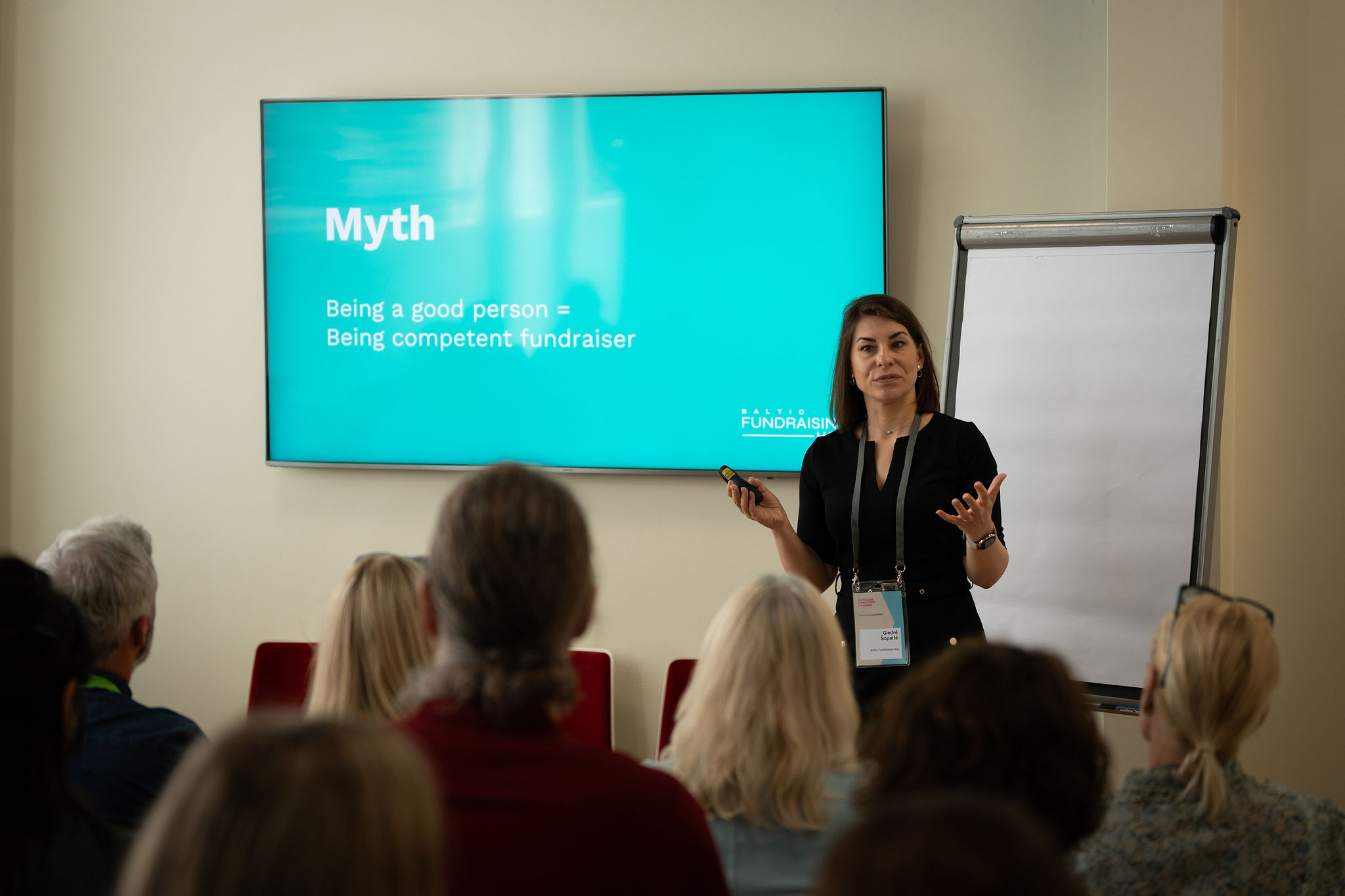
Photo credit: DFRV/Karolina Granja
Measuring what matters: Lessons from Lithuania
This challenge became particularly visible to me in 2020, when I was developing Lithuania’s first national fundraising competency development programme, Fundraising@LT PRO. At the time, we brought together 30 fundraisers from different nonprofit organisations. They represented different causes, different levels of experience and different fundraising responsibilities. Some focused on grants, others on individual giving, corporate partnerships or communications.
One question quickly emerged: how could we design a meaningful learning programme without understanding participants’ existing competencies?
Too often, training programmes are built around assumptions. We assume we know where the gaps are. We assume what participants need to learn. We assume which skills require strengthening. But assumptions are a risky foundation for capacity building.
Inspired by Peter Drucker, the renowned management consultant often referred to as the father of modern management, and his famous observation that “you can’t manage what you can’t measure”, we decided to begin by assessing competencies. We developed a fundraising competency assessment test designed to evaluate knowledge and skills across several key fundraising domains. The objective was not to label people or rank them against each other. Instead, we wanted to understand existing strengths, identify gaps and build a programme based on evidence rather than intuition.
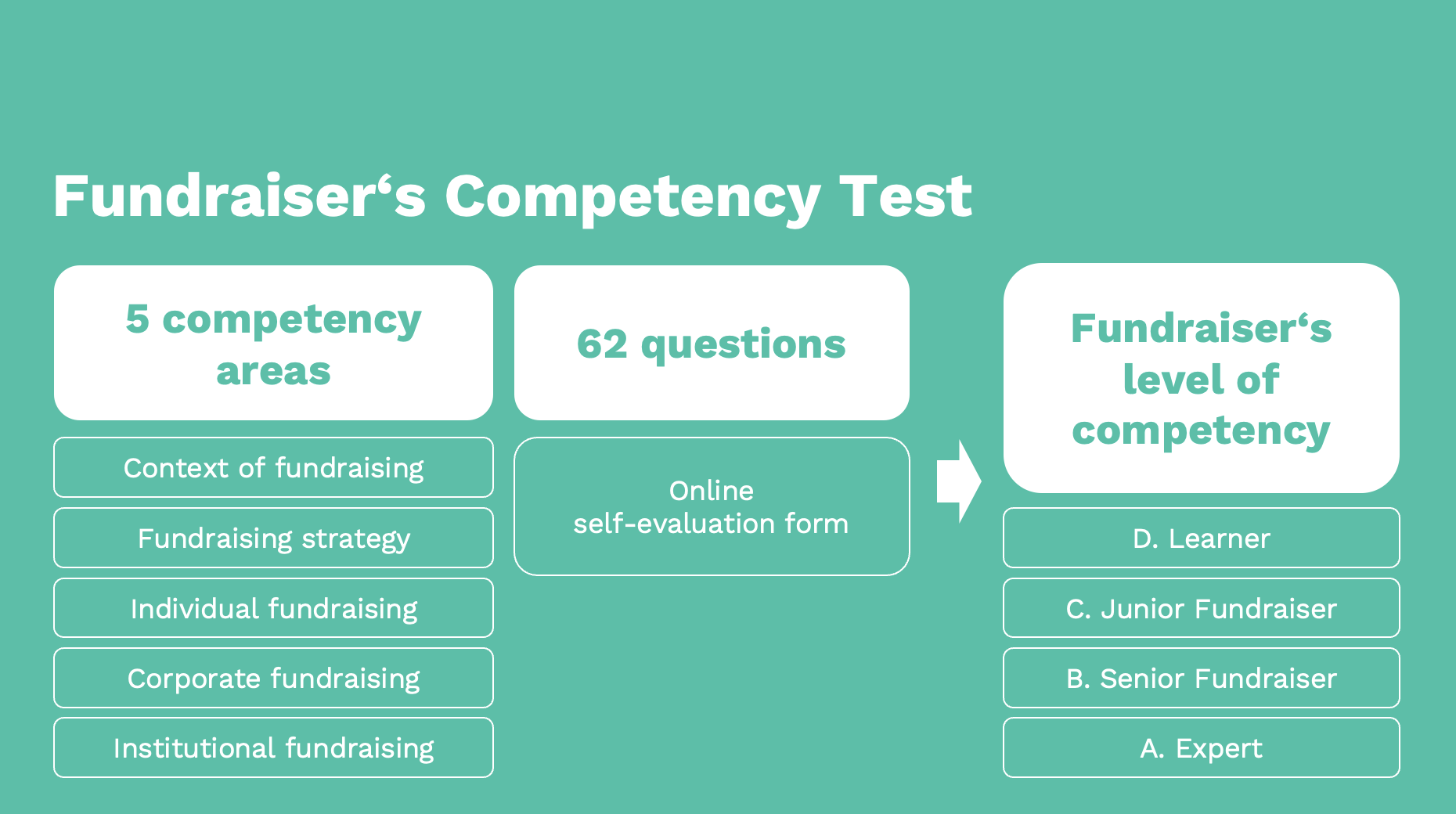
The results were illuminating. Most participants assessed themselves at Junior Fundraiser level, while only a small number reached Senior Fundraiser or Expert level. Some competencies proved stronger than expected, particularly understanding of fundraising ethics and the broader fundraising environment. Other areas revealed substantial gaps, especially individual fundraising, donor relationship management and fundraising strategy.
Most importantly, the assessment allowed us to replace assumptions with evidence. Rather than designing a programme around what we thought participants needed, we could focus on the competencies that genuinely required development.
Together with our international partners, we created a learning programme specifically targeted at those areas. Fifteen months later, participants completed the same assessment again.
The results were encouraging. Overall fundraising competencies improved by 22%. The strongest growth occurred in areas that received the greatest attention during the programme, including donor stewardship, fundraising strategy and community fundraising. Perhaps even more significantly, most participants progressed from Junior Fundraiser to Senior Fundraiser level, while the number of Expert-level fundraisers tripled.
Click images to enlarge
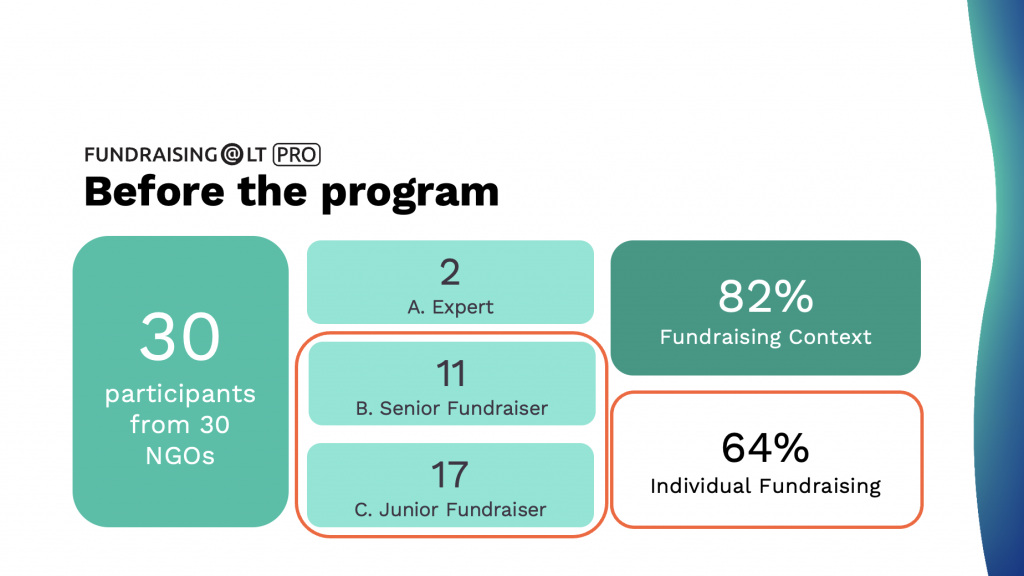
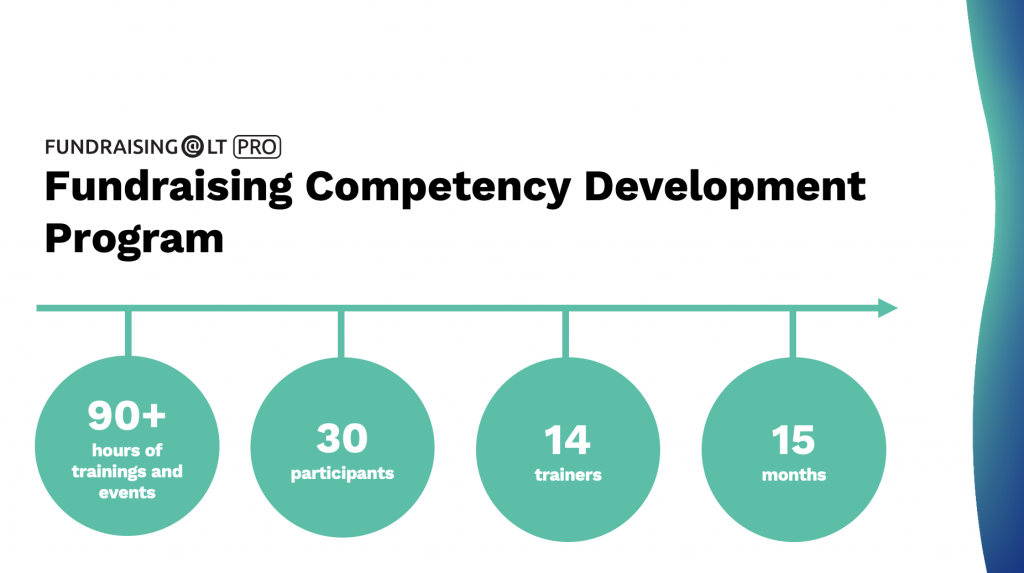
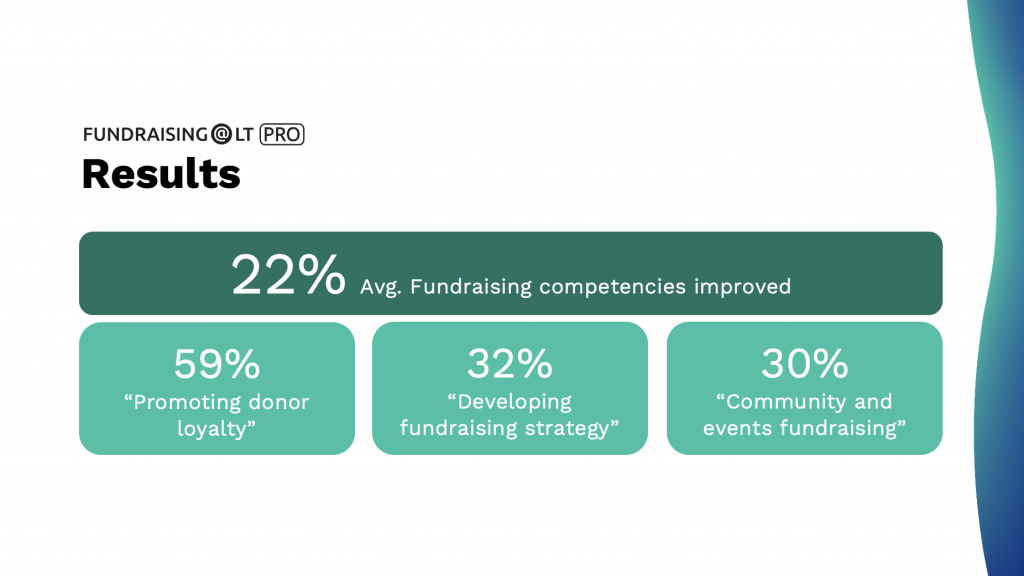
For me, the most important lesson was not the percentage increase itself. It was the confirmation that when competencies are clearly defined, assessed and intentionally developed, professional growth becomes visible and measurable. And once development becomes measurable, it can be managed strategically.
Beyond training: Building stronger fundraising teams
At the same time, the project revealed an important limitation. The competency assessment helped us understand where people were. It did not fully answer the question of where they should be.
We could identify competency gaps, but we lacked a framework that clearly described what fundraising excellence looked like at different stages of professional development. We needed something that could help organisations not only assess competencies, but also define expectations and create a roadmap for growth.
This led me to the concept of the Fundraising Competency Matrix*.
A competency matrix is a practical framework that defines the knowledge, skills and behaviours required for effective performance in a particular role or profession. It helps organisations understand what competencies people need, what level they currently demonstrate and what they need to develop in order to progress further.
Click images to enlarge
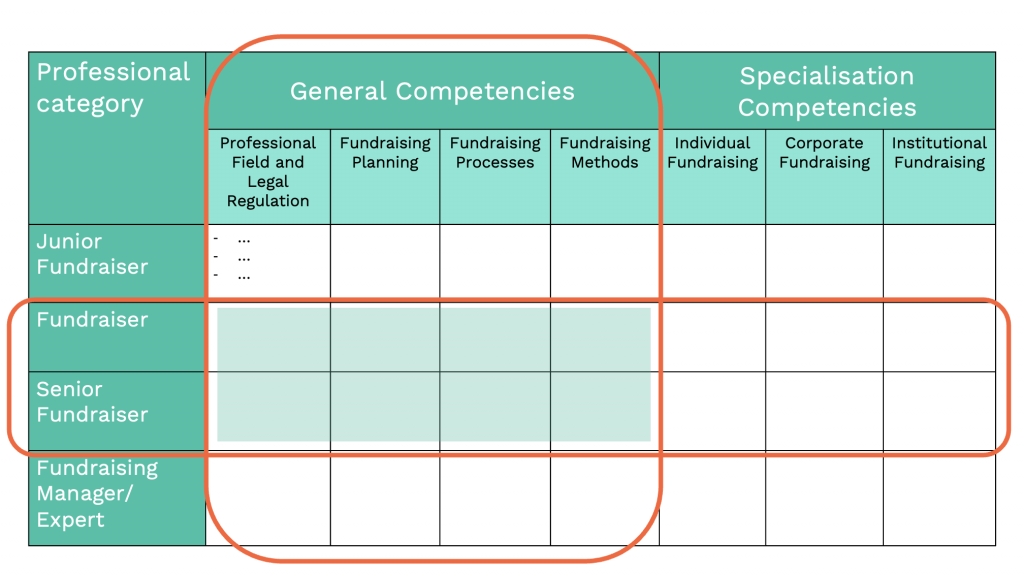
The value of such a framework goes far beyond training. It helps identify competency gaps and learning needs, supports workforce planning and talent management, improves recruitment processes and creates clearer career pathways. Most importantly, it turns competency development from guesswork into a structured management process.
One of the biggest shifts in thinking comes when organisations stop viewing every competency gap as a training problem. Training is important, but it is only one of many development tools. Competencies can also be strengthened through mentoring, coaching, peer learning, stretch assignments, job shadowing and practical experience.
When we focus only on training, we tend to ask: “What course should we send this person to?” When we focus on competencies, we start asking a much more useful question: “What experience, support or learning opportunity would help this person develop?”
The competency matrix helps organisations make these decisions intentionally rather than reactively.
It also encourages us to think beyond individual development and look at fundraising teams as a whole. Not every fundraiser needs every competency. A corporate fundraiser requires different expertise than a digital fundraising specialist. A fundraising manager needs different capabilities than someone at the start of their career. The goal is not for everyone to be equally good at everything. The goal is to ensure that all critical competencies are covered somewhere within the team.
This creates a different conversation inside organisations. Instead of asking, “Why are we not reaching our fundraising targets?”, leaders can ask, “Do we have the competencies required to achieve them?” In many cases, that question leads to far more useful insights.
For too long, fundraising capacity building has been driven by intuition, assumptions and individual experience. As our profession continues to evolve, competencies need to become the foundation of how we recruit, develop and manage fundraising talent. Strong fundraising teams are not built by chance. They are built through intentional investment in competencies.
Fundraising is not a talent. It is a profession. And professions become stronger when competencies are visible, measurable and continuously developed.
*The Fundraising Competency Matrix is available here and can be downloaded and adapted for use.
 About Giedrė Šopaitė
Giedrė Šopaitė is a strategic philanthropy consultant, speaker and trainer with over 20 years of experience in the Lithuanian NGO sector. She is the founder and CEO of Baltic Fundraising Hub, supporting nonprofits in fundraising strategy and competency development, and advising companies on strategic philanthropy. Giedrė created Fundraising@LT PRO, Lithuania’s first fundraising competency development programme, and serves as an EFA board member. Her work focuses on strengthening fundraising professionalism, leadership and ethical, impact-driven philanthropy.