
Robert Buchhaus: Why face-to-face fundraising is the future of trust
May 13, 2026
From talent to competence: Building stronger fundraising teams through competency-based development
June 24, 2026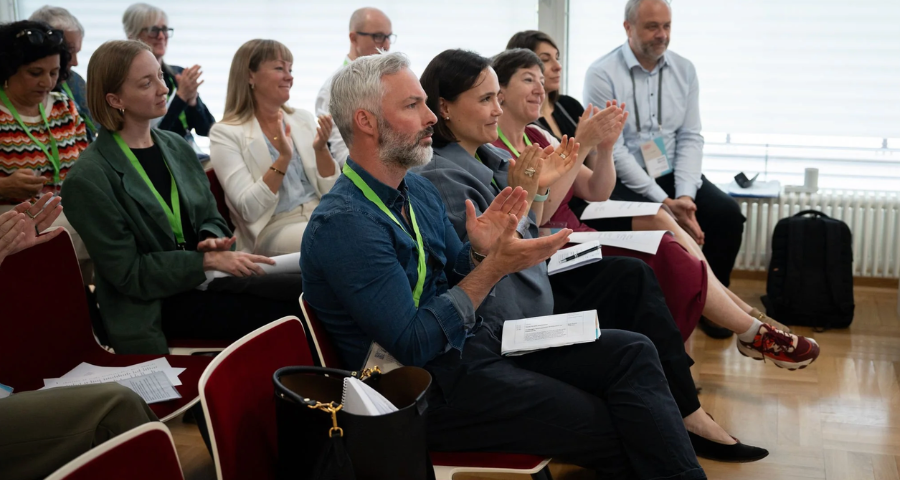
At the EFA Learning Symposium in Berlin, one of the most thought-provoking discussions focused on people, leadership and the future of fundraising as a profession.
Moderated by Pia Tornikoski, the Symposium panel brought together Zoe Oldham of Upsall International and Jeanette Eesmann-Foster of Mindwize to discuss what organisations should look for when recruiting fundraisers and the competencies fundraising leaders will need in the years ahead. On competencies, the panel highlighted strategic thinking, leadership and people management, data and AI literacy and stakeholder engagement, among others.
Recruiting insights
According to Zoe Oldham, organisations frequently search for a “unicorn” candidate: someone who can bring networks, raise substantial income immediately, manage teams, think strategically and fit perfectly into organisational culture. Such expectations often reveal deeper organisational challenges.
Jeanette Eesmann-Foster highlighted the importance of sustainable income and long-term investment. She argued that organisations often seek short-term fundraising gains when they should be investing in systems, data and donor relationships that create sustainable growth.
The panel repeatedly returned to the importance of realism. Successful recruitment begins with realistic expectations, alignment between leadership and fundraising teams, and a shared understanding of what fundraising can achieve over time.
One of the strongest themes was the growing professionalisation of fundraising. Across Europe, fundraising is increasingly recognised as a discipline requiring formal competencies, continuous learning and professional standards. Several participants noted that certified fundraising qualifications are appearing more frequently in recruitment processes. Certification and professional education are increasingly valued across Europe.
The conversation also highlighted resilience. Fundraising leaders increasingly operate in high-pressure environments characterised by ambitious targets, economic uncertainty and changing donor expectations. The panel suggested that resilience, peer learning, mentoring and wellbeing support should become recognised elements of fundraising leadership development.
Fundraiser retention is becoming as important as donor retention
The panel concluded that fundraising success depends less on individual heroes and more on organisational readiness, leadership and long-term investment. Organisations must be fundraising-ready before hiring fundraisers.
Perhaps the most important conclusion was that fundraising success cannot be separated from leadership. Organisations that invest in people, learning, culture and long-term thinking are better positioned to recruit, retain and support successful fundraisers. Both speakers highlighted that fundraising is under increasing pressure and burnout is becoming a significant issue.
Another recurring theme was retention. Just as organisations focus on donor retention, they must also think about fundraiser retention. Frequent staff turnover undermines institutional knowledge, disrupts donor relationships and weakens long-term fundraising performance.
As the Symposium demonstrated, the future of fundraising is not only about raising more money. It is about building organisations where fundraisers can thrive, adapt and contribute over the long term. Leadership quality and organisational culture strongly influence fundraising success.