
From talent to competence: Building stronger fundraising teams through competency-based development
June 24, 2026
France: 125 years of freedom of association — & a shrinking civic space
June 24, 2026
Professional education for fundraisers is no longer optional but a strategic necessity. This was one of the clearest messages to emerge from the EFA Learning Symposium 2026. And as such, discussions concluded, the future of fundraising leadership begins with a commitment to making learning more accessible, equitable, and relevant.
This theme was particularly evident in the discussions that took place during the afternoon’s parallel workshops, and in the Symposium’s closing session, where the conversation continued with a presentation of findings from each workshop and questions from the audience.
The workshops were:
Challenges And Potentials Of Education In Fundraising — moderated by Nele Theuer from BIBB, and discussing questions including how educational requirements will change in the future and which developments are needed to meet them; how to ensure that the educational needs of aspiring fundraisers from different backgrounds and with varying priorities are adequately addressed; and how structural characteristics of the German fundraising landscape helps or hinders these developments.
Should I Forget What I Know? Rethinking How Fundraisers Learn — moderated by Heike Kraack-Tichy from the German fundraising association DRFV, which explored the evolving demands on fundraisers and the skills, mindsets, and formats needed to stay effective in a rapidly changing world. The session challenged traditional approaches to professional development, asking what still works and what doesn’t, and how learning in fundraising can become more connected, practical, and bold.
Fun(d)raising 2050: Let’s Rock! Imagining the Future of the Profession: What Will Fundraising Look Like in 2050? — moderated by Pia Tornikoski from VaLa, the Finnish fundraising association. This workshop invited attendees to help shape the agenda and explore the future of fundraising. They discussed emerging trends, potential disruptions and key challenges, both within and beyond the nonprofit sector, reflecting also on long-term developments and who will lead the next generation of fundraisers.
Rounding up their conclusions, the final discussion of the day focused on the evolution of professional development in fundraising, examining the structural barriers to education, the transformative impact of AI, and the shifting organisational cultures required for the next generation of leadership.
Participants agreed that continuous learning should be viewed as a strategic investment that strengthens both individuals and organisations, rather than as an optional add-on. However, it was evident that for many fundraisers, accessing education and training remains difficult, with heavy workloads, limited budgets, and lack of long-term planning often prevent organisations from investing in professional development.
It was also clear that there has been a shift in how people learn, with traditional, authority-led training models increasingly giving way to peer-to-peer learning approaches that encourage collaboration, knowledge sharing, and practical experience. This change, participants noted, also reflects broader workforce trends, particularly among younger generations who value interactive and community-based learning environments.
Artificial intelligence, it was noted, can provide valuable support by providing real-time guidance and coaching, as well as automating routine tasks and supporting more sophisticated donor engagement strategies. At the same time however, there was strong agreement that technology will complement — not replace — human skills and qualities.
The discussion also extended beyond individual learning to organisational transformation, exploring more collaborative models of leadership, and ecosystem-based structures where fundraising is a shared responsibility across the organisation. Innovative practices such as dedicated “Innovation Labs” were highlighted as ways to encourage experimentation, reflection, and learning from failure.
Looking ahead, attendees imagined future fundraising roles such as Chief Empathy Officer, Chief Visionary Officer, and Giving Architect — positions blending technological capability with human-centred leadership. These future-focused roles reinforce the idea that the most valuable skills will be those that combine strategic thinking, emotional intelligence, and the effective use of technology.
Ultimately, the symposium concluded, the future of fundraising leadership depends on creating learning cultures that are accessible, relevant, and continuous. Organisations that invest in professional development, embrace innovation, and foster collaboration will be best positioned to thrive in an increasingly complex environment.
Key learnings
- Professional development is a strategic necessity, not an optional activity.
- Workload, funding constraints, and limited planning cultures remain major barriers to learning.
- Peer-to-peer and collaborative learning models are becoming more effective than traditional top-down approaches.
- AI will increasingly support fundraisers through automation, coaching, and data-driven insights. Human skills, however, remain irreplaceable.
- Innovation requires dedicated space and time, such as ‘Innovation Labs’ and structured reflection on failures.
- Organisations should foster a “fail-forward” culture that encourages experimentation and learning.
- Knowledge sharing and internal shadowing help spread learning across entire teams.
- Future fundraising professionals will need both technical and human skills, combining AI literacy with resilience and emotional intelligence.
- A common framework for fundraising competencies would help organisations assess, develop, and invest in talent more effectively.
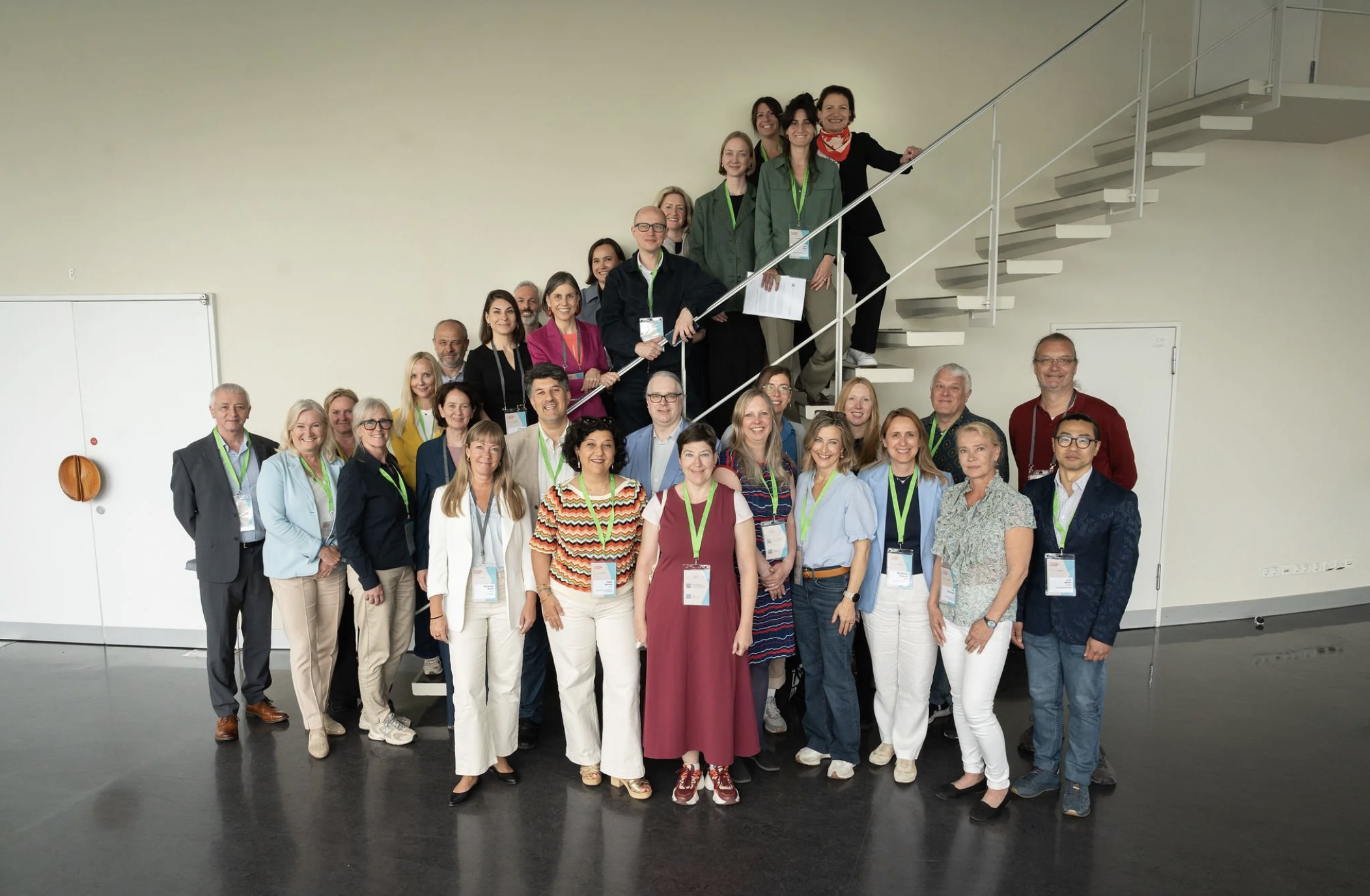
Photo credit: DFRV/Karolina Granja
The EFA Learning Symposium 2026 took place in Berlin on 31 May-1 June. A big thank you to Deutscher Fundraising Verband (DFRV) and their events agency Kaiserwetter for hosting us.