
Josh Leigh: Banned and blocked? How charities can win in the new digital landscape
February 25, 2026
Slovakia’s “Russian Law” episode: How a government tested the limits of civic space
April 1, 2026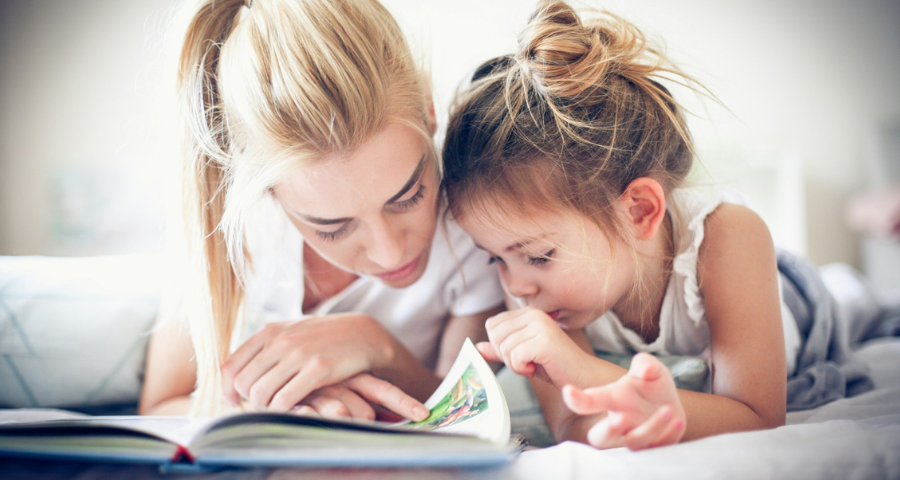
Reaching new people, particularly with political campaigning, is a common challenge for NGOs, including Oxfam Germany. Valerie Senden, its director of public fundraising and marketing, explains how offering a children’s book enabled Oxfam Germany to engage a new audience with social injustice, generating leads and gaining regular givers.
Many NGOs will be familiar with this issue: communication largely takes place within the same bubble. It poses a constant challenge, especially in political campaigning. So how can we reach new people with our messages? And then, how can we win them over as long-term allies?
For Oxfam, as a political NGO in particular, how to reach new people is a question that arises repeatedly and with great urgency. Social inequality is one of our core issues, and once a year, we publish our Inequality Report at the World Economic Forum in Davos, which generates a lot of media attention. However, the central product of the report is a 60-page study – not exactly a crowd-pleaser that is likely to go viral on social media.
The task
So the questions we ask ourselves every year are:
- How can we communicate our complex political work?
- How can we be low-threshold and target-group-oriented?
- How can we generate leads with the help of this product?
We know that we need to reduce the complexity and encourage engagement but that we also need to remain credible. So how do we reach those who find reading a study too time-consuming, and communicate our content clearly and simply?
As a politically active organization, we must not fall into the trap of populism, and as a donation-based organization, credibility is central to our supporters.
So what can we offer beyond the news headline? And how can we encourage people to engage with us on our various channels?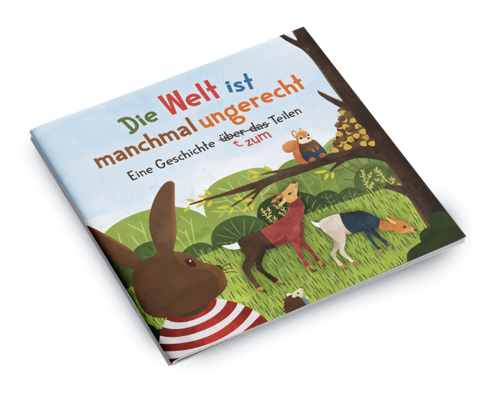
Our answer to this question is usually: we start a petition. But apart from the fact that petitions are time-consuming, the problem remains that we usually address the same audience. And in this case, we only had six weeks to launch the campaign in time for the World Economic Forum.
The path to the product
From the outset, 2024’s campaign was planned as a cross-team project. It could only work if we brought together expertise from our advocacy, campaigning, and communication teams. So first, we set up a strict schedule with clear responsibilities and sign-off loops. This was clearly going to be a sprint.
In search of something new, we placed particular emphasis on attracting new target groups. With the help of user-centred design thinking approaches, we wanted to break away from Oxfam’s academic communication style and be as accessible as possible without coming across as patronizing. We asked ourselves: Which target group do we want to reach? And above all: What are their needs and interests? And how can we create added value for them?
The idea: a children’s book!
Why? Because parents and guardians are perfect match. They’re interested (including politically) in the future of our society and planet, and willing to get involved – but they have little time.
As parents and guardians, they’re also always on the lookout for interesting, high-quality entertainment for children that they can use to spend time together.
 This offered an opening for us to simplify these complex issues with a child-friendly presentation. We came up with a little rabbit that encounters various situations symbolizing social injustices and presents solutions for a fairer world.
In book form, titled “Sometimes the world’s not fair”, it presented an opportunity for parents and children to learn together and discuss social injustice.
The campaign set-up
Our goal was to collect email leads (with double opt-in) and phone numbers (through required fields) with the e-book as an incentive. First however, we launched the campaign with a limited print edition at the World Economic Forum in Davos. After this sold out, the campaign continued as an e-book only.
We used advertising to reach people – mainly via paid campaigns on Facebook and Instagram – as well as target group-specific distribution to parents, educators, and design-savvy audiences.
Initial success
The first step of lead generation was extremely successful. The initial print run of 4,000 copies sold out within three days, generating 4,000 leads at a very low cost. Even when considering the total costs (including agency, print, and logistics), the results were significantly better than other lead campaigns.
Oxfam also reached a completely new and significantly younger target group, and achieved a very strong response from both new leads and existing supporters. In addition, we received numerous enquiries from daycare centres, schools, and parents interested in more copies for classrooms and libraries.
Conversion emailing to our newsletter subscribers was also very successful with a high conversion rate to regular givers.
Learning from mistakes
While the quality of email contacts was good, reaching people by phone was less successful. The new contacts were difficult to reach and had little time, leading us to conclude that this channel was not suitable for the target group.
Trying new things
So what next? Our children’s book had clearly struck a chord with a target group that we had previously found difficult to reach. However, in order to turn this into lasting success for us and gain new supporters in the long term, we had to make some adjustments.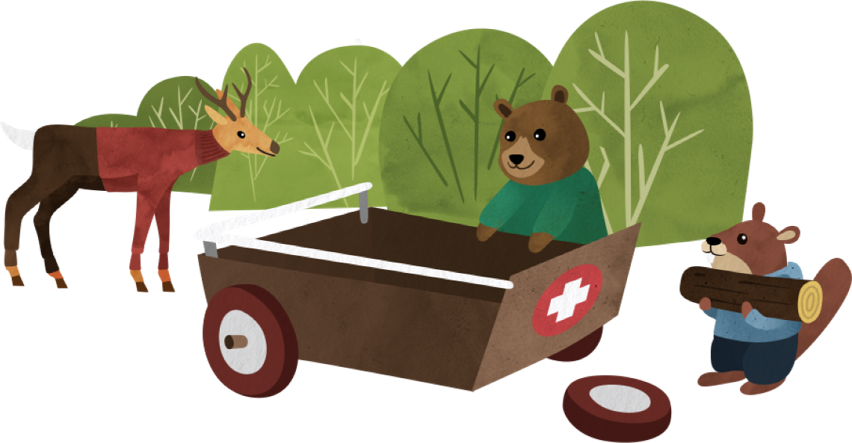
Since the children’s book was obviously a very strong incentive, we converted the campaign into a direct acquisition campaign for regular givers. This was implemented with a landing page and an accompanying Meta campaign, and quickly showed an attractive CPO and a constant source of new regular donors. To keep interest high we developed a range of new paid social assets with different approaches, such as user-generated content (UGC).
We also tested the children’s book as an incentive in various other campaigns, as it can be easily combined with different topics, such as cuts in international aid programs. We sent out various conversion emailings to existing supporters, where we were able to achieve an extremely high conversion rate.
Finally, we were able to get a well-known German actress to record the text as an audiobook for us, which we used as part of our Christmas campaign.
In 2025, the campaign won first prize from the German Fundraising Association, and the book has now been adapted internationally by other Oxfam affiliates and published in countries including Turkey, Australia, and the Netherlands.
Lessons learned
- Be bold – trying new things can take a leap of faith but it pays off
- Get your basics right – set out a strict schedule and clear responsibilities
- Take your target group seriously – respond to what you know about them and what their actions tell you
- Don’t be discouraged – every mistake is a lesson you can learn from
- The devil’s in the details – it’s the many elements in a campaign that, together, make the difference
Valerie Senden
About Valerie Senden
Valerie Senden studied philosophy, German language and literature, and English language and literature in Berlin, Potsdam, and Turin, Italy. She has been working for Oxfam Germany in the field of digital communication and marketing since 2019, becoming head of digital communication in 2022 and currently serving as director of public fundraising and marketing (interim).