
Lessons from Skillshare 2025: how to fundraise in a changing world
December 10, 2025
Fundraising in Europe: 2025 in review, & expectations for the year ahead
January 14, 2026
Jana Ledvinová, CEO of the Czech Fundraising Center, reflects on the evolving role of civil society in the Czech Republic, drawing parallels between the authoritarian constraints of the 1980s and emerging pressures today. She highlights how nonprofit organizations, once restricted to ideologically aligned activities, have become independent pillars of democracy, warning against recent government measures that echo past patterns, and calling for vigilance and the active defence of civil society to ensure the hard-won independence and influence of nonprofit organisations is preserved.
I have a persistent sense of déjà vu. The language and reasoning of parts of today’s political representation increasingly remind me of the 1980s. For many of us, that is a period we either did not experience or remember only vaguely. Yet it is worth recalling – especially when old patterns of thinking about civil society are resurfacing in new forms.
Pre-1989 – the reality of living under a totalitarian regime
Before 1989, there was essentially only one official space in Czechoslovakia where civic initiatives and associations could operate: the National Front. Access, however, was limited to organisations that shared and actively promoted the values of the socialist regime. Everything else was pushed into a grey zone or outright dissent – a small, forbidden, and constantly threatened space.
The backbone of the “civil society” at that time was formed by mass organisations controlled by the state: Pioneers for children, the Socialist Youth Union for young people, and the Communist Party of Czechoslovakia for adults. Participation was de facto a prerequisite for civic engagement and often for professional advancement. Alongside these were numerous other associations – firefighters, hikers, amateur theatre groups, nature conservation groups, associations for people with disabilities, and many more. On the surface, the array of associations appeared vibrant and diverse, yet all operated under constant supervision. Secret collaborators were present in every organisation, and each association had to regularly demonstrate that it fulfilled “socialist goals and commitments.”
The totalitarian regime thus created the illusion of freedom of association. People could collaborate, strengthen local communities, maintain traditions, care for the environment, or educate younger generations – but only within strictly defined ideological boundaries. Freedom was permitted, but only insofar as it served propaganda and control.
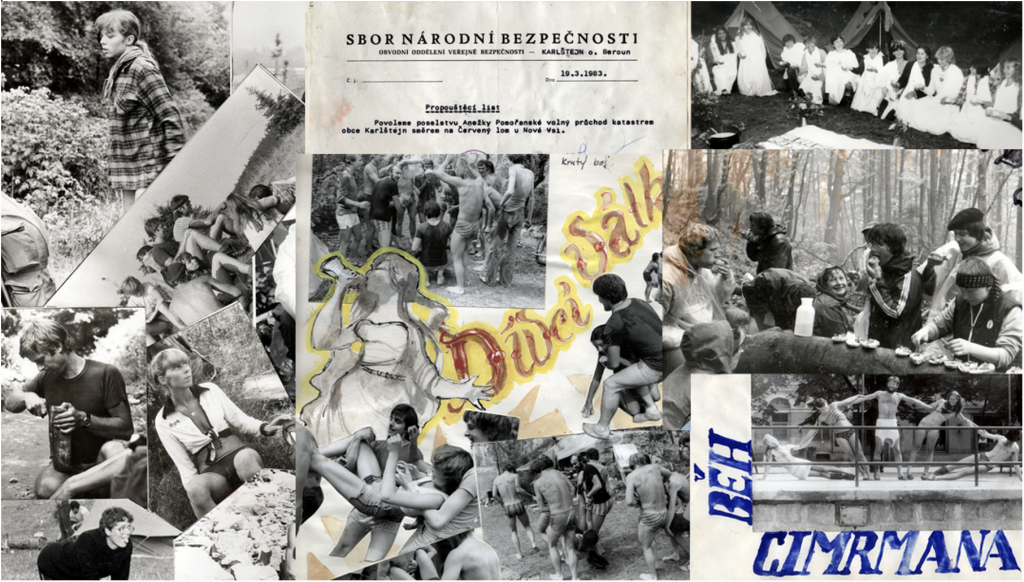
Images from events of the association Tereza in the 1980s (https://terezanet.cz/english/)
Post-1989 – space for an independent nonprofit sector to thrive
Paradoxically, it was from this environment that a strong and dynamic civil society emerged after 1989. Suddenly, space opened for a truly independent nonprofit sector that could professionally contribute to the development of society. It became clear that nonprofit organisations were neither appendages of the state nor the market, but independent pillars of a democratic system. They can counterbalance centralising tendencies of state power, respond flexibly to people’s needs, and complement the market where it fails.
A fundamental turning point was the ability to finance activities not only from public but primarily from private sources. Fundraising brought nonprofits real freedom – the ability to decide their own direction, professionalise, and grow according to their own vision. Today, tens of thousands of nonprofit organisations demonstrate that civil society can function voluntarily and professionally, with responsibility, enthusiasm, and creativity. It has become a natural, indispensable, and often joyful part of our daily lives.
Now – an insidiously turning tide
It is all the more worrying when the current government starts systematically making life difficult for nonprofits. Proposals to introduce central registers, limit funding for so-called “political nonprofits,” mandatory transparent accounts, and other administrative hurdles strikingly echo the past.
Vaguely defined terms and deliberate ambiguity about who these measures apply to raise fears that the real aim is to silence critical voices and eliminate those who hold views different from those in power. This process is subtle and creeping. It is presented as an effort to save money, maintain order, or increase efficiency so that the public will accept it without resistance. That is precisely why it is dangerous.
This is not only about nonprofits themselves – it is about the level of freedom in society as a whole.
A time for vigilance & active defence
We must not be deceived by the “boiling frog” method. Once we become accustomed to small infringements on freedom of association, it may be too late to resist larger ones. History teaches us where the attempt to confine civil society to a single, centrally controlled ideology leads. We must not allow this path to be repeated.

Jana Ledvinová
Wave photo by Marie Pankova on Pexels