
Senior appointments at fundraising associations
June 24, 2026
Ireland urged to follow Europe & stop €81m charity lottery loss
June 24, 2026
Europeans are less likely to have a “strong sense of belonging” in their local community, which links to lower relative levels of generosity, finds the World Giving Report 2026 from the UK’s Charities Aid Foundation (CAF).
As was also the case in the World Giving Report 2025, Europeans gave away less of their income to good causes than anyone else last year — 0.6%, compared with 1.6% in Africa, 1.2% in Asia, 0.8% in both North America and Oceania, and 0.7% in South America.
South America is also the continent where least people (50%) gave (by any means) to good causes in 2025, versus 57% in Europe, and slightly more than two-thirds in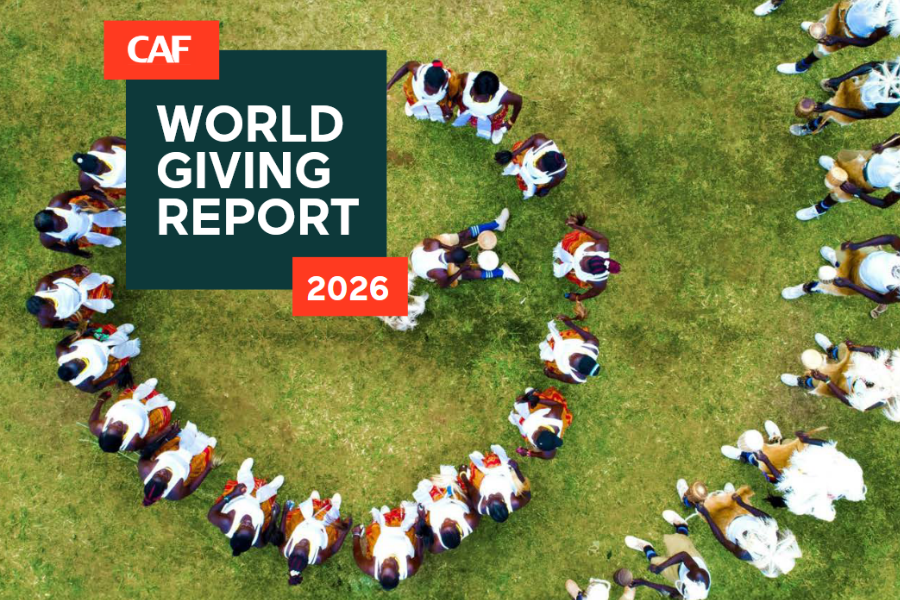 both Africa and Asia.
Ukraine the ‘belonging’ outlier
CAF says that around the world, 66% of people feel a strong sense of belonging to their local community — but the figure is below 50% for all of the 11 European nations in the survey.
People in 10 of those European countries all gave on average less than 1% of income to good causes in 2025. The outlier is Ukraine, with 1.2%. Meanwhile, people in countries with a higher sense of belonging gave on average 1.7% of their income.
CAF found that younger people are nearly twice as likely than older people to say that community plays a large role in their life, whether local, religious or online (54% of under-34s, versus 31% of over-55s).
Donors in higher income countries are also more likely to give to charities that work around the world than those in less wealthy states — and Norway and Sweden are the only countries in which more than half of donors give to global charities.
Government influence and impact stories
The report also says that people who see the impact of charities in their local area are more generous. Nearly two-thirds (62%) of people globally say that charities have had a fairly or very positive impact in their local community, rising to 75% in Africa. In Europe, almost half (48%) of people say that charities make no difference locally, or that it is impossible to tell what the impact is.
Those who see a positive impact donated three times more as a proportion of income supported twice as many causes, and gave to more charity types, CAF says.
Ashling Cashmore, head of impact at CAF, comments:
“Where we have seen charities tell impact stories that donors have really connected with, it has been easier to build the kind of trust and engagement that sets them up for longer-term success.”
CAF also asked people what they thought of their government’s support for a culture of giving — 40% globally agreed that their government encourages giving, rising to 55% in Asia and 51% in Africa.
In Africa, Europe, North America and South America, governments talking positively about charities was seen as the main way they encourage giving.
Meanwhile, Asian respondents said that good charity regulation was the top answer to how governments inspire giving, while tax incentives was the most common response in Oceania.
CAF was supported by a number of global partners in putting together the report, meaning there are deep-dives on many of the countries in the survey including Bulgaria, Finland, France, Germany and Italy.