
Take part: EU-wide survey on TTPA impact
February 25, 2026
ERNOP to publish cross-national mapping of philanthropy in Europe
February 25, 2026
Fundraising professionals should prioritise donor retention and robust data infrastructure alongside acquisition in order to achieve success in 2026, argue Danish fundraising experts.
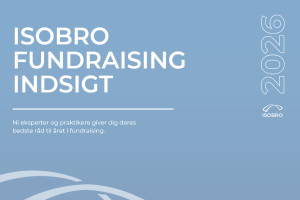
Danish fundraising association and EFA member ISOBRO has published its annual Fundraising Indsigt report, containing essays from nine experts.
 The report also stresses that organisations need internal cultures that empower fundraising professionals, better understanding of what motivates different donors, and digital strategies focused on community building and data collection, rather than broadcast advertising.
Lucas Regnér, head of fundraising at sex education charity RFSU, says in his essay that he aims for less than 5% unattributed conversions. He says that without a highly accurate and well-used CRM as part of an integrated data infrastructure, organisations cannot make proper, data-driven decisions.
This data-driven approach must extend to retention, argues Sandra Olsen, private fundraising leader at animal welfare charity Dyrenes Beskyttelse. She calls for sharper segmentation based on donor recency and warmth, with dedicated journeys for first-time donors and tailored reactivation for lapsed supporters.
Jeta Salihu, fundraising manager at Danish Muslim Aid and ISOBRO’s 2025 Fundraiser of the Year, advocates prioritising relationships over acquisition, with loyal donors receiving meaningful community, member events and transparent impact reporting.
Culture and motivation
Delivering on these ambitions requires organisational structures that empower fundraising professionals, argues Lisbet Christoffersen, head of communication, engagement and press at children’s charity Børns Vilkår.
She draws on her organisation’s decade-long journey to embed fundraising as a core discipline. Ten years ago, when Børns Vilkår intensified its fundraising focus, the initiative met internal resistance around costs and tactics.
The breakthrough came through deliberate cultural work. Børns Vilkår appointed “fundraising ambassadors” from other departments to spread positive narratives, and used office design to reinforce the mission with quotes from children helped by its BørneTelefonen service.
In another essay, independent consultant Christian Sophus Ehlers identifies six distinct donor motivations: altruistic, self-interested, identity-based, personally affected, community-oriented, and activist. He says that most organisations only communicate to one or two types.
Sanne Dollerup, partner at marketing agency Institut for Kundetyper, frames donor types through emotional problems they’re solving. She says that many charities focus on donors seeking community or safety, but overlook those motivated by powerlessness.
The report also includes a forward from ISOBRO’s general secretary Kenneth Kamp Butzbach, who writes:
“What they [the nine essays] have in common is a clear recognition: success in 2026 requires more than visibility and volume. It requires understanding, prioritisation and the will to develop our methods.”
Indeed, the current climate is likely to require further innovation from Danish fundraisers in 2026 – in December, Butzbach expressed frustration at recent Government actions which he said “make it harder for organisations to raise money”.
Picture by Getty Images for Unsplash+