
Czech Republic: nonprofits must beware the turning tide
January 14, 2026
UK civil society in 2026 – resilient, resourceful, but under strain
February 25, 2026
As we head into a new year, we ask nine fundraising experts about the challenges and opportunities 2025 brought for fundraisers in their countries, and for their views on what 2026 will bring: both at home, and more widely across Europe.
Across Europe, the last 12 months have been challenging. Further political shifts to the right have brought attacks on civil society, democracy, and civic space – bringing greater awareness of the need for organisations to work together, and to mobilise new and greater support. At the same time, as highlighted in the 2025 European Nonprofit Pulse released last month, several ongoing issues have intensified, impacting fundraising and operations.
The economic climate has remained tough, increasing costs and service demand for many, and making it difficult to raise sufficient funds. Adding to this, last year funding cuts abounded, and several countries reported new or incoming rule changes restricting channel use, while Meta’s banning of ads on social issues caused consternation, impacting nonprofits across the EU. And, as if this wasn’t enough, recruiting and retaining sufficient fundraising staff, and managing workload have also remained key challenges.
However, 2025 also brought good news and opportunity. AI for example is now everywhere, and while issues remain, nonprofits are increasingly making use of it to ease some of the workload pressures, and to better understand and engage with audiences. Some countries also welcomed tax reforms supporting giving, while in others donations remained stable or rose, such as in Germany and Netherlands, and innovation – as seen in France – opened the doors to new ways of giving.
So let’s take a closer look: at 2025’s biggest challenges for fundraising on a country basis, at the most positive developments, and at what’s coming up in 2026 – both for countries individually and more broadly across Europe. Here are some insights from EFA members in Austria, Ireland, Italy, Netherlands, Norway, Poland, Spain, Sweden, and the UK.
“Increasing political campaigning against nonprofits in the context of public funding debates further impacted the operating environment.”

(c) Sima Prodinger
Ruth Williams, CEO, Fundraising Verband Austria
In 2025, key challenges here in Austria included rising cost pressures in service delivery, an aging donor base combined with increasing difficulty in reaching younger audiences, shortage of qualified fundraising professionals, and growing competition in online donor acquisition. Meta’s restrictions posed significant challenges, as did the new IBAN name-matching requirement. Additionally, increasing political campaigning against nonprofits in the context of public funding debates further impacted the operating environment.
More positively, overall giving remained very high, reaching €1.07 billion, with record donor participation. 79% of people aged 16 and above made a donation, reflecting strong solidarity and trust in charitable organisations. Another highly positive trend was the growing interest in legacy giving: nearly 11% of all donations in the country already come from bequests.
We also view the impact of the major nonprofit reform (2024) very positively. Since implementation, the list of tax-deductible charitable organisations maintained by the Ministry of Finance has grown by almost 1,300 organisations (+86%), significantly increasing the diversity of nonprofits able to offer tax-deductible giving.
In Austria, 2026 will see the continued implementation of the major nonprofit tax reform. Green finance and ESG-linked projects will create new partnership opportunities for NGOs, especially in renewable energy initiatives. Digitalisation remains a priority, with nonprofits trying to adopt AI tools for fundraising and donor engagement.
Across Europe, 2026 marks a transition phase for EU funding programmes as the current Multiannual Financial Framework approaches its final years, bringing new priorities for social innovation and sustainability. Nonprofits will face tighter regulations on AI governance, data protection, and accessibility standards. A proposed EU statute for cross-border associations could simplify operations for international NGOs – but is currently off the table. Fundraising trends point to multichannel strategies, automation, and ethical standards updates – especially in connection with AI.
“Nonprofits must adapt to rapid technological change and continued attacks, responding in ways that avoid victimhood while positioning themselves as credible, constructive solutions to societal needs.”
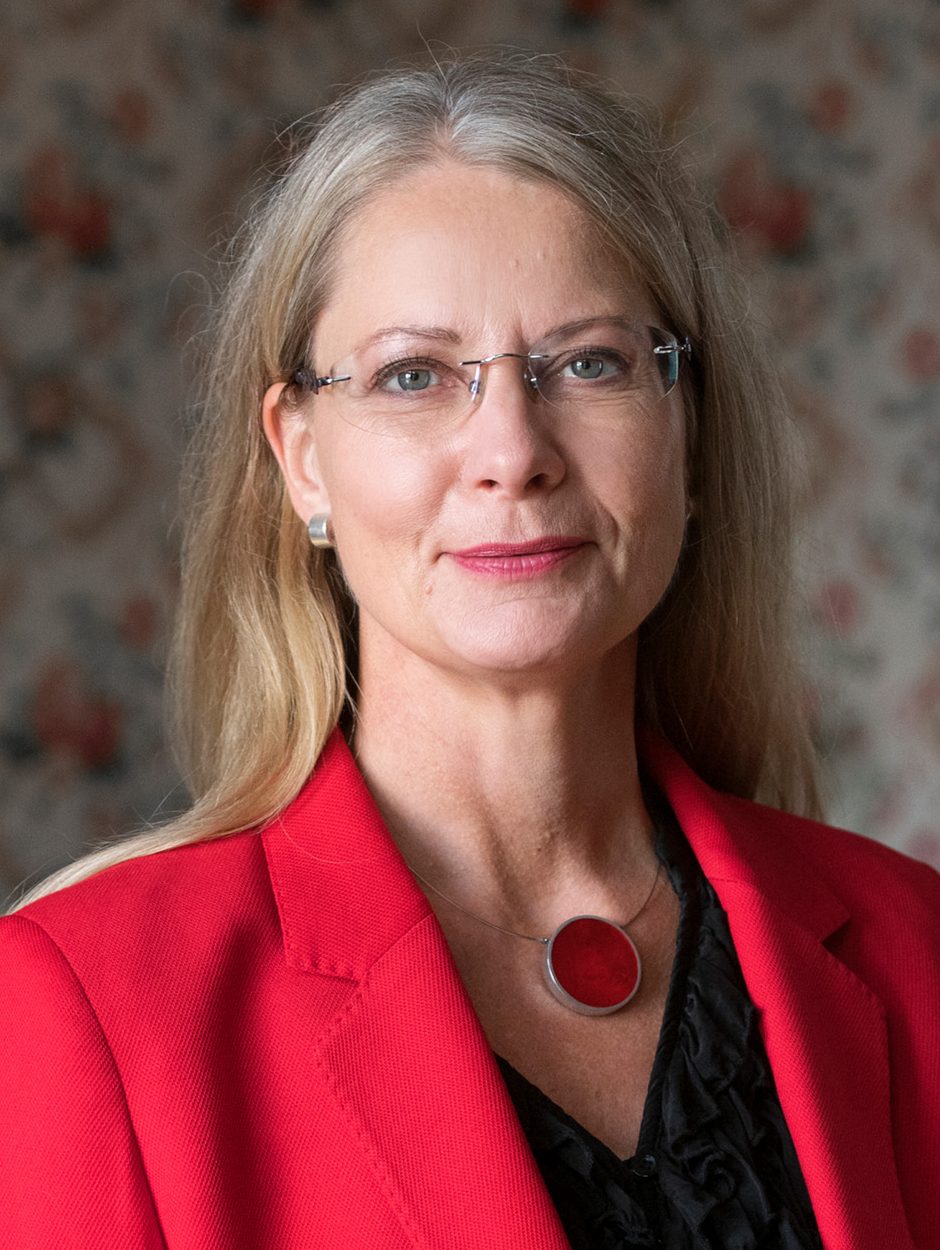 Charlotte Rydh, secretary general, Giva Sverige
Key challenges for fundraising in Sweden last year were reduced public funding across many organisations, and political calls for increased private funding – without adequate support. In response, organisations look to grow donations, corporate partnerships and philanthropic giving, requiring operational and strategic fundraising expertise. Many, however, lack the resources to invest in fundraising capacity, and/or the insights and courage among leadership to pursue long-term funding strategies. This is compounded by political narratives portraying CSOs as incompetent or fraudulent, making support harder to secure.
More positively, the government has initiated several efforts in recent years to evaluate and propose incentives to increase giving. Following a public inquiry, tax deductions for corporate gifts will be introduced from 1 January 2026. Eligibility is currently limited to gifts for academic research or social work, mirroring individual deductions, but this may change. Through our advocacy for broader inclusion, and business sector pressure to clarify sponsorship rules, the government has examined these issues in a second inquiry, to be published on 19 January.
A third inquiry, established last June, addresses private funding for the cultural sector, including the potential addition of culture as a deductible purpose, and matched giving as another incentive. Giva Sverige has been on the expert groups for each inquiry, with our proposals on matched giving and broader eligibility partially reflected.
These positive developments help to offset the challenges but again, without resources to invest in fundraising, giving incentives will fall short of their potential.
Looking ahead, nonprofits face a landscape of uncertainty and opportunity. Sweden’s September election will have major consequences on everything from public and private funding to the operating space for civil society. Globally, unresolved developments – including the war in Ukraine – raise questions about future public solidarity and the tipping points for civic mobilisation. Nonprofits must also adapt to rapid technological change and continued attacks on civil society, responding in ways that avoid victimhood while positioning themselves as credible, constructive solutions.
“Pro-democratic organisations that have invested consistently in building relationships with individual donors have not experienced a significant decline in funding.”

Andrzej Pietrucha, fundraising and marketing trainer and consultant, Academy of Civic Organizations Foundation
Two research reports published in 2025 have significantly shaped our understanding of non-grant fundraising in Poland. On the positive side, the Klon/Jawor Association’s NGO Capacity Report – published biennially – points to a steady growth in both individual and corporate giving. These sources now account, on average, for more than 25% of NGOs’ budgets, making them the second-largest income stream after public funding.
At the same time, a contrasting picture emerges from a report on donor behaviour published by the Polish crowdfunding platform pomagam.pl. This report identifies the 1.5% personal income tax designation as the dominant form of ‘philanthropy’ in Poland. However, this mechanism should not be considered philanthropy in the strict sense, as taxpayers are obliged to pay this tax anyway. The report also highlights that giving in Poland remains largely spontaneous and occasional, driven more by emotion than by long-term commitment.
Drawing on my practical experience, I would add two further observations. Despite the fact that the populist government lost power two years ago, pro-democratic organisations that have invested consistently in building relationships with individual donors have not experienced a significant decline in funding this year. We are also witnessing a growing trend of micro-donations collected at supermarket checkout points across major retail chains. While this model can generate substantial income for selected organisations, it offers very limited opportunities to build direct donor relationships beyond increased brand visibility.
“The reduction in support from USAID has led to difficult decisions, layoffs, and downsizing of important projects.”
 Per Mejlænder Brynning, head of communications, Fundraising Norge
In 2025, many of our members were severely affected by cuts in aid funding, particularly the reduction in support from USAID. This has led to difficult decisions, layoffs, and downsizing of important projects. In times like these, our sense of community is truly tested.
We are also facing challenges in Norwegian politics. The government is considering stopping the delivery of physical mail to people’s home mailboxes. Direct mail is an important fundraising channel for Norwegian nonprofits, and we fear this could have major consequences if potential donors can no longer receive their letters in this way.
The same applies to telemarketing, where there is discussion about whether it should be possible to call donors from regular mobile numbers, and whether everyone calling on behalf of an organisation should be marked or labelled in the same way as fully commercial telemarketing companies.
In addition, we are concerned that the government will lower the tax deduction limit for donations to nonprofit organisations. This amount was halved in 2022, and some parties in the majority block are now considering to reduce it even further. These are issues we are now working hard to prevent, while also striving for greater understanding between politicians and the nonprofit sector, where we also keen an open mind to new incentive schemes.
Heading into 2026, these will continue to be the main challenges faced by the sector in Norway. More positively, there has been a notable increase in revenues among our members, accompanied by a growing recognition of the need for the sector to secure more sustainable financing.
“There has been a stronger push toward collaboration among organisations to reinforce the sector as a whole.”

Fernando Morón Limón, executive director, Asociación Española de Fundraising
In Spain, the most positive developments for nonprofits in 2025 were, first, a growing awareness of the need to fight disinformation, hoaxes, and fake news. The sector is investing more in training and building stronger communication skills, with better tools to connect with the public and explain their causes clearly. At the same time, there has been a stronger push toward collaboration among organisations to reinforce the sector as a whole.
On the negative side, two regulatory decisions have directly affected key fundraising channels. One is a regulation that restricts commercial phone calls; it is still unclear whether this must also be applied to nonprofit fundraising calls, but the uncertainty is already having an impact. The second is Meta’s decision to ban paid campaigns when they involve political or social content. This is already affecting digital communication and fundraising campaigns.
2026 is likely to be another difficult year due to the international sociopolitical climate. In Spain, nonprofits will need to strengthen institutional relations with political, social, and business actors, to highlight both the value of nonprofit work for society and the importance of fundraising as a tool for organisational sustainability and independence. Spain has a very loyal base of supporters, and they should become our driving force in 2026 – active advocates who help communicate the causes and the role of nonprofits more effectively to the wider public.
The major Europe-wide (and international) challenge is figuring out how to carry out communication and fundraising in an increasingly digital world, while recognising that organisations depend on large corporate platforms that set the rules and can limit both independence and core social mission. This is not something any single organisation can solve alone. It requires cooperation among nonprofits and a broader alliance across civil society.
“The momentum behind digital engagement, long-term philanthropy, and cross-sector collaboration feels strong. The question now is how we build on it.”
 Ceri Edwards, executive director of engagement, Chartered Institute of Fundraising, and EFA president
Reflecting on the fundraising landscape, it’s clear just how much has shifted — and how much it’s still delivering — despite ongoing economic pressure and changing donor behaviour.
What’s stood out this past year is the creativity and resilience running through the charity and nonprofit sector. In the UK, we’ve seen standout moments of collective generosity, from the London Marathon raising an extraordinary £87.3m, to the Big Give Christmas Challenge reaching a record £57.4m. These moments matter — not just for the income they generate, but for what they remind us about the power of people coming together around causes they care about.
At the same time, the bigger picture is more complex. Many charities are dealing with flat or falling income, fewer regular donors, and increasing demand for services. It’s a tough combination — and a clear signal that innovation, meaningful supporter engagement, and more diversified income strategies aren’t “nice to haves”, but essentials.
The European picture in 2025 was similarly mixed, with nonprofits operating in a challenging environment shaped by rising costs, regulatory change, and pressure on civic space. And yet, many organisations are adapting — rethinking donor relationships, investing in digital, and finding new ways to stay connected to supporters in uncertain times.
For me, 2025 both challenged long-held assumptions about giving and reaffirmed something fundamental: collective action still works. Community still matters. And thoughtful innovation can unlock real impact. As we move into 2026, the momentum behind digital engagement, long-term philanthropy, and cross-sector collaboration feels strong. The question now is how we build on it — and keep unlocking purpose-driven support for the communities and causes that need it most.
“AI offers opportunities to improve efficiency and engagement – but success depends on ethical reflection, team training, and adaptability.”
 Anika de Groot, project coordinator, Goede Doelen Nederland
In 2025, direct marketing channels in the Netherlands faced stricter consumer protection rules. Luckily, exemptions for charities on telemarketing and field marketing were secured, but pressure on fundraising channels is rising. Civic space in the Netherlands is also under pressure, with proposed legislative changes that could restrict fundamental freedoms such as the right to protest and access to justice. The EU Transparency and Targeting of Political Advertising regulation (TTPA), intended to strengthen democracy, has had unintended consequences. Major social media platforms now enforce strict rules on paid ads, some limiting nonprofit messaging to such an extent that it’s affecting freedom of expression, donor income, and supporter engagement.
Despite these challenges, the sector continues to adapt and innovate. Private giving among our members grew by 6%, and legacy income continues to rise sharply – providing long-term stability for many charities. This growth has increased demand for proper control over the settlement of bequests. For years, the Dutch Charity Association’s “Legacy Bureau” has enabled organisations to outsource this responsibility to experienced professionals, saving costs and ensuring accurate handling. These developments indicate that, even in a complex environment, individual giving remains resilient and long-term support is expanding.
Looking ahead, three priorities stand out for nonprofits: (1) stronger joint advocacy at the European level, (2) responsible adoption of AI, and (3) diversification of income streams.
New transparency rules and fast-moving technologies will shape how charities advocate and fundraise, making collaboration across Europe more critical than ever. Protecting civic space and fundamental rights remains a shared priority. Meanwhile, AI offers opportunities to improve efficiency and engagement – but success depends on ethical reflection, team training, and adaptability. Finally, senior fundraisers in the Netherlands stress that building a balanced mix of income channels is key for resilience. This requires investment in specialised skills and data, but it pays off: less dependency and risk, stronger donor relationships, and sustainable long-term growth.
“In 2026, regulation and performance will align more closely. Boards will be judged on compliance and impact together, with transparency central to building trust.”
 Scott Kelley, chief operations officer, Charities Institute Ireland
2025 was a year of competing pressures for Irish fundraisers. Demand for services remained high while donor capacity tightened. Fundraisers had to work harder simply to sustain income and relevance, and costs rose sharply. The Charities Regulator’s new 2025–27 strategy raised expectations around governance, reporting and transparency. While positive for trust, these changes require time, skills and investment that smaller charities often struggle to resource.
Our Benchmark Fundraising & Data Survey provided vital context. Fundraisers account for 3.5% of staff but generate 23% of sector income — highlighting both productivity and risk. With 60% of organisations having one or no staff dedicated to CRM or reporting, high-performing teams are often operating without adequate infrastructure. In 2025, fundraising became a test of capacity as much as creativity.
A key positive shift was the maturation of data and payments. The EU’s Instant Payments Regulation enabled faster, safer euro transfers with built-in verification, reducing friction at the moment of giving. The CII Benchmark Survey also marked a step-change, providing reliable data for benchmarking income, ROI and workforce structure — strengthening the case for sustained investment in fundraising and digital capability. Additionally, professionalisation continues to advance. Demand for skilled fundraisers, data analysts and governance-aware leaders is rising, and the conversation has moved from whether to invest in fundraising to how to do so more effectively.
In 2026, regulation and performance will align more closely. Boards will be judged on compliance and impact together, with transparency central to building trust. Digital payments, mobile-first journeys and recurring giving will become standard, while talent retention will make training and development a strategic necessity. Across Europe, regulatory and digital acceleration will continue. The EU AI Act and CSRD will raise expectations around transparency, risk and measurable impact, creating opportunities for charities that can deliver credible data. Payments infrastructure will remain a quiet catalyst, reinforcing a future of fundraising built on efficiency, trust and a clearer link between donor intent and real-world impact.
“In a fracturing Europe, nonprofits are the ones that will connect people, causes, and movements.”
 Michela Gaffo, president, ASSIF
In Italy, top of the challenges in 2025 were the government’s decisions on funding and budget law. Tax reforms impacted donations, and Italy’s tax-efficient giving scheme (the so-called 5×1000 or 5perthousand) was penalised with a spending cap. Moreover, choices were made to reduce funds for poverty relief, education and healthcare. Only the ‘Servizio Civile Universale’ (an official opportunity to volunteer in nonprofits in Italy or abroad with some government-provided payment) received more funds – but not enough.
Elsewhere, the rise of new technologies such as AI and its use in fundraising activities saw a broader gap developing between nonprofits, with small/medium-sized ones struggling to understand these tools and uncertain about policies.
More positively, I’d point firstly to the evolution of private philanthropy (in quantity and quality). Foundations and philanthropic organisations are working together to grow funding, increasingly through a trust-based approach. Secondly, to the rise of grassroot organisations in public opinion: enabling them to connect people more than ever and to stimulate them to mobilise and give for civil and humanitarian rights.
2026 will be a very tough year. I’m afraid we’ll see more restrictions to democratic and civic space, as well as reduced investment in social and cultural development. Nonprofits will face crucial decisions: to raise their heads and voices, grow and cooperate more than ever, or be reduced to a bare minimum. In addition, old generations of givers are declining, and new generations ask nonprofits to be more relevant in our society. Disintermediation will also rise, giving more space to grassroots organisations and nonformal movements.
More broadly across the continent, in a fracturing Europe nonprofits are the ones that will connect people, causes, and movements. It’s our role, our time.
Main picture by Pixabay