
Private donations increase by €300 million in Germany
November 26, 2025
Danish legal changes leave country’s charities ‘increasingly disadvantaged’
December 10, 2025
Nonprofits across Europe are responding to shortfalls in funding as well as spiralling workloads by deepening their focus on key areas including fundraising and stewardship; diversifying their channel use; and adopting AI, according to the European Nonprofit Pulse 2025 report, from the European Fundraising Association in partnership with the UK’s Chartered Institute of Fundraising and Salesforce.
The European data for the report was provided by Salesforce from a global survey. The report focuses on the responses of 751 senior representatives of nonprofit organisations in four European nations: France, Germany, the Netherlands, and the UK. Organisations surveyed were small (0-100 staff) medium (101-500) and large (500 plus), across a wide range of causes. Alongside the data, commentary from fundraising experts in a further five countries explores the findings to broaden pan-European insight.
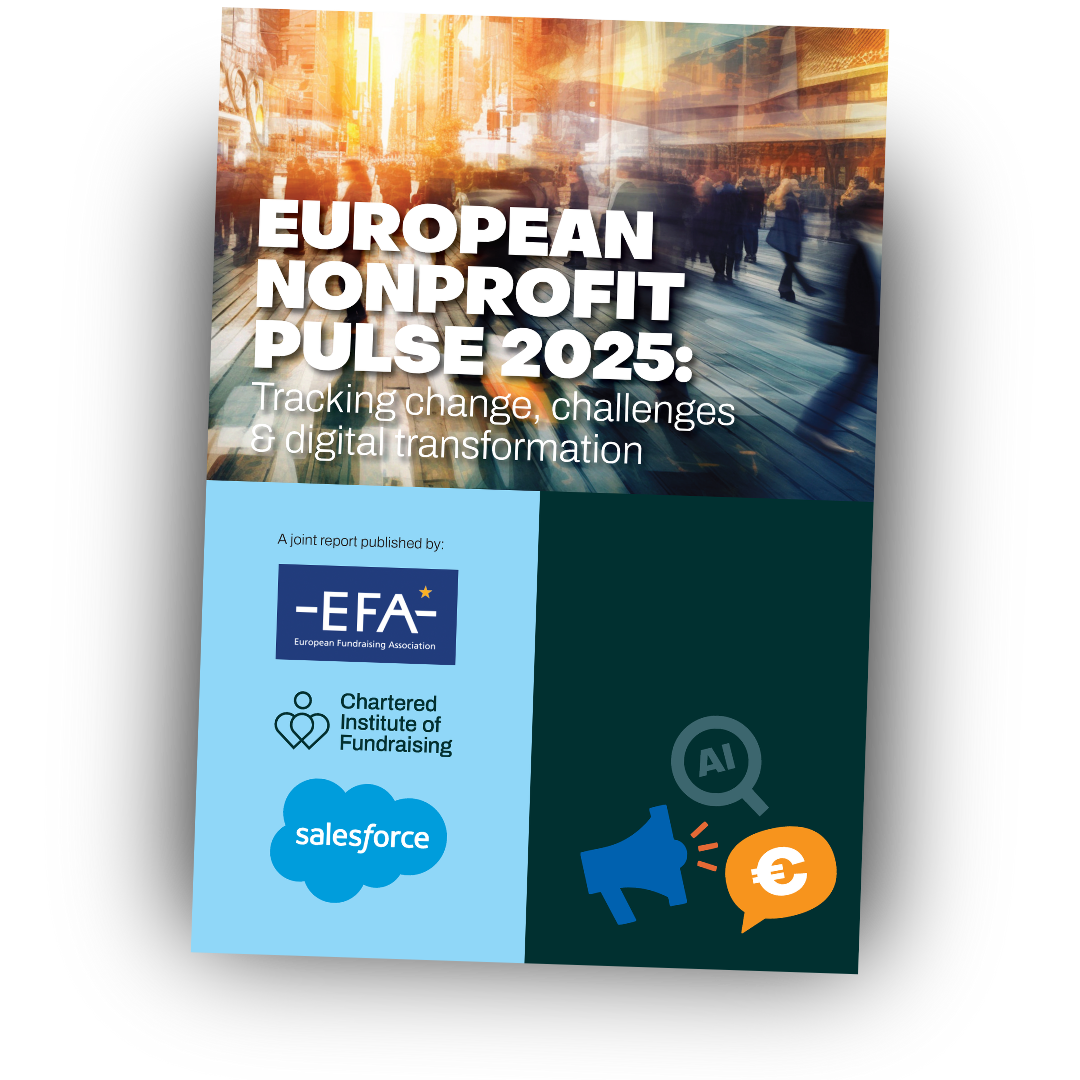 The report tracks change and key challenges, alongside how nonprofits are responding. AI is a special area of focus, examining sentiments towards it and growing use. Guidance is also included on how nonprofits can build organisational resilience in the face of these challenges.
Key Findings
Funding & workload remain sector’s biggest challenges
A year on from 2024’s report, many of the sector’s top issues remain in focus while several have further intensified.
- Raising sufficient funds has become more pressing – cited by 36% of respondents compared to 28% last year
- Managing workload is a challenge for 35% – similar proportion to last year’s 37%
- Recruitment (29%), retention (28%), and staff wellbeing (24%) remain key issues, with recruitment and retention up from 25% and 20% last year, and wellbeing down slightly from 26%.
Shifting strategies – sector’s response
In response to the pressures, nonprofits continue to evolve their fundraising strategies.
- Channel mix – nearly a third (30%) report diversifying strategy to include a wider mix of channels, up from 23% in 2024’s report
- Investment in fundraising, marketing and communications – 28% are investing more, up from 18% last year
- Acquisition & retention – around a quarter (24%) have increased efforts to acquire and retain supporters, while 20% are prioritising regular giving and donor stewardship
AI adoption continues at pace – and is no longer optional
Nonprofits are putting a strong emphasis on digital-first fundraising and increasingly adopting AI, with fundraising and operational efficiency emerging as the main drivers.
- Digital fundraising – 87% of nonprofits are now using digital channels for fundraising, with social media (51%), website (48%), email and social media advertising (both 37%) most popular
- AI use – nearly half (48%) of nonprofits now use AI, a significant rise from 13% last year, and 56% say they’re open to adopting it. Engaging with AI however is no longer optional as adoption accelerates more widely
- Data privacy – (49%) and data security (47%) risks are the top concern at almost half of respondents, followed by job displacement or loss of skills (29%). 18% highlight issues around accuracy or ethics
Commenting on the findings, Ceri Edwards, EFA president and executive director of engagement at the Chartered Institute of Fundraising said:
“This benchmarking exercise offers vital insights into how Europe’s nonprofits are faring, and how they’re responding to major challenges. The notable increase in AI adoption this year, combined with the ongoing focus on digital innovation, highlights how nonprofits are actively strengthening their resilience and sustainability in a time of immense change.”
Andrea Goezinne, senior product marketing manager, Salesforce, added:
“The sharp rise in AI adoption across Europe’s nonprofits is one of the most significant developments highlighted in this year’s benchmarking. AI offers a genuine opportunity to reimagine how nonprofits fundraise and operate and, as its wider use accelerates, keeping up means engaging with it is no longer optional. However, real transformation will only happen with solid foundations in place: strong, integrated data, modern systems, and investment in people. Those that implement these will be best positioned to unlock AI’s full potential and strengthen their long-term sustainability.”
The full report and its findings can be downloaded for free here: European Nonprofit Pulse 2025